
It is often said that the journey holds deeper meaning than the destination, and nowhere is this felt more vividly than when travellers descend from the scenic hills and warrior land of the Mon district of Nagaland into the welcoming plains of Assam, where the road gently merges into the historic Dhodar Ali in Assam, carrying forward a route layered with memory, character, and continuity.
Known evocatively as the “Lazy Man’s Road,” Dhodar Ali draws its name from an ironic past. “Dhod,” meaning lazy, and “ali,” a raised road, recall those who once feigned indolence to evade royal duties, only to be entrusted with the very task of shaping this enduring route. Stretching across more than two hundred kilometres and commissioned around 1687 by the Ahom king Gadadhar Singha, the road gradually evolved into a vital connector of Upper Assam and a corridor towards neighbouring lands.
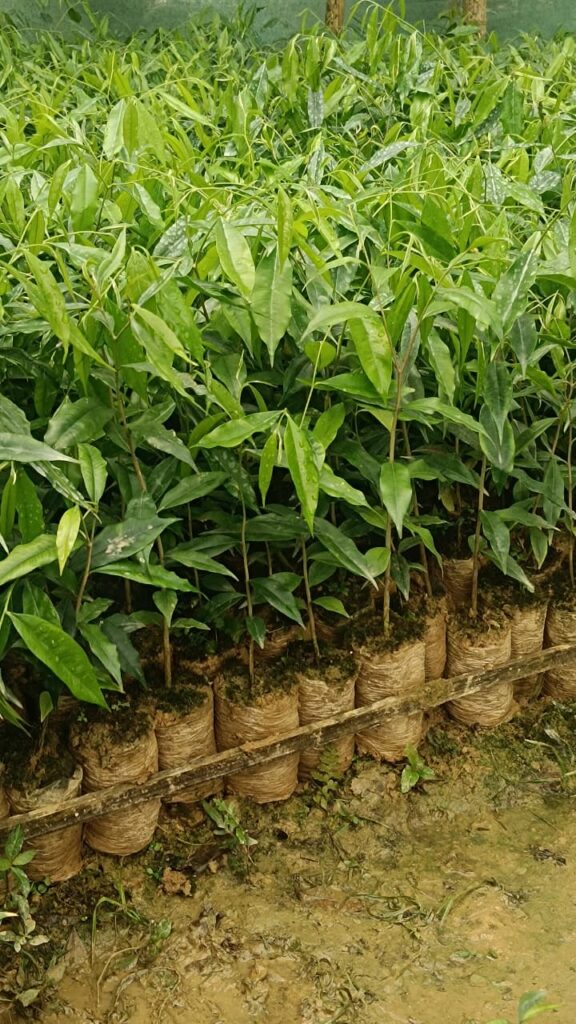
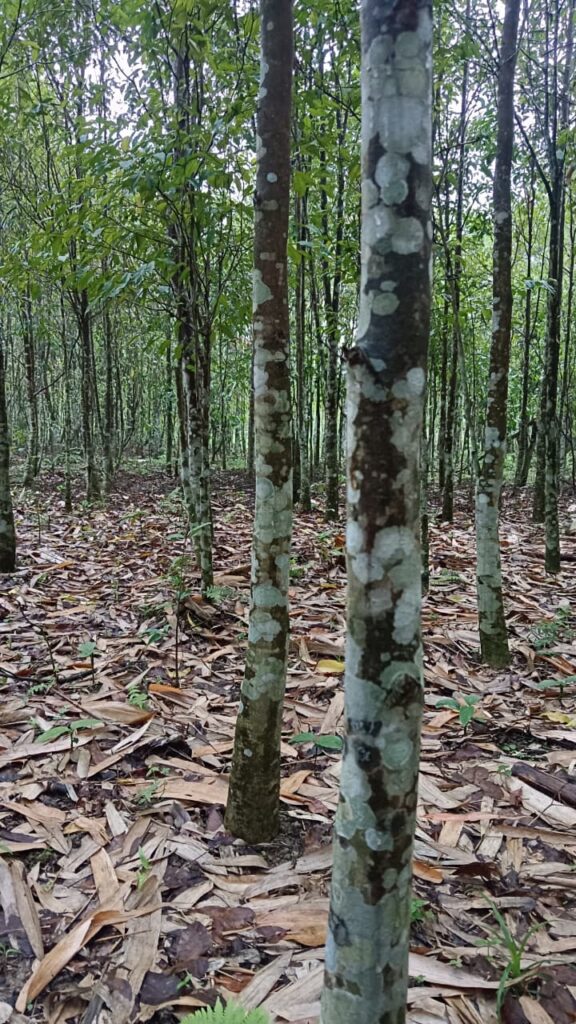
Photo credit – Jayanta Madhab Saikia
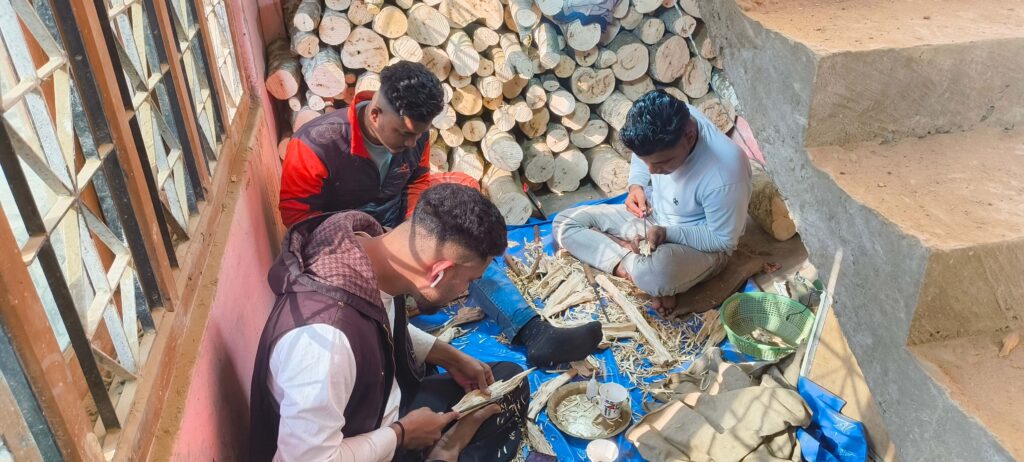
As Dhodar Ali weaves through landscapes and lives, each stretch unfolds like a quiet narrative where history lingers. Beyond Mariani near Kamarbandha Ali, or along the Amguri–Jhanji route to Jorhat, everyday life is deeply intertwined with agarwood, shaping both livelihood and identity. Known as oud, aguru, or sanchi, it is rooted in Assam’s legacy, its bark once used to create Sanchi Pat (Xasi Paat) for durable manuscripts before paper took over. From these serene settings emerges one of the world’s most enigmatic fragrances, formed in the resin rich heartwood of Aquilaria trees when wounded, often by the Neurozerra conferta, triggering the creation of precious oleoresin. Cherished across the Middle East and valued in perfumery, cosmetics, and healing traditions, this “liquid gold” is produced in Assam and sent to global hubs for final processing into high-end perfumes carries the essence of Assam far beyond its origins., carrying the lingering essence of Assam far beyond its origin.
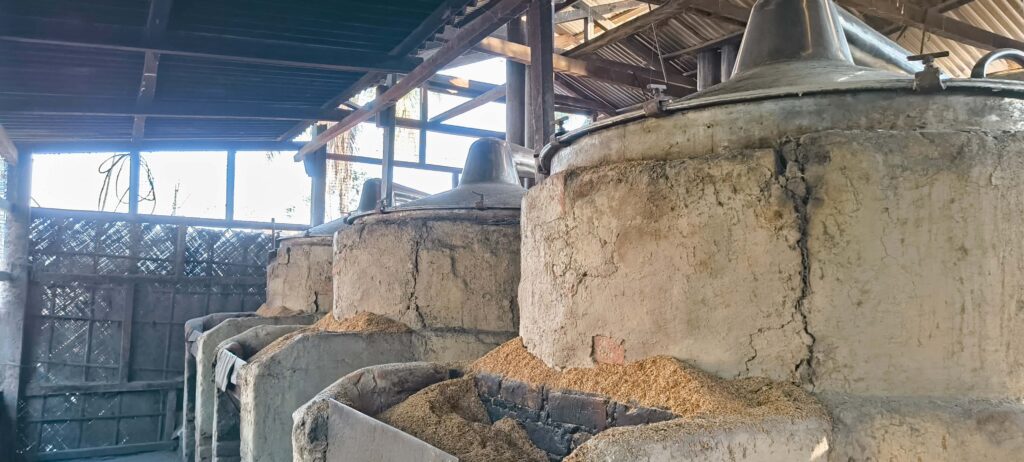
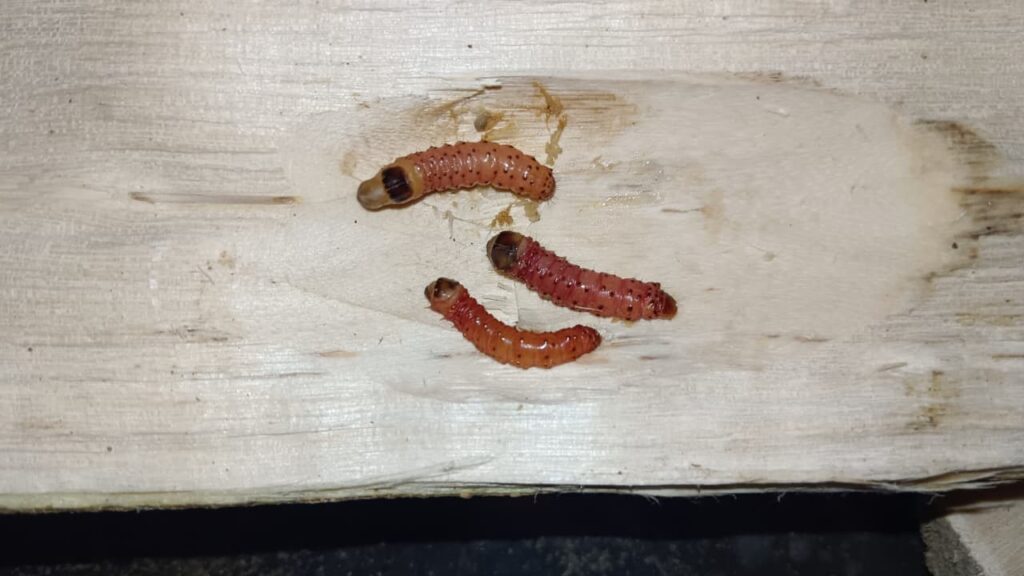
Photo credit – Jayanta Madhab Saikia
Agarwood trees are widely grown across the Golaghat region in home gardens and small residential tea gardens, often intercropped with tea for shade. Building on this natural setting, local youths and farmers have adopted thoughtful practices, from planting saplings to carefully introducing borers that encourage resin formation and enhance quality, attracting buyers from far and wide. Harvesting follows Assam’s agarwood policy, enabling regulated trade from private lands while protecting wild trees. The journey from tree to fragrant chips and oil is slow and intricate, with resin rich wood cut, soaked, and distilled over days in traditional units. Along the Dhodar Ali stretch, life unfolds gently, inviting visitors to savour homely local meals beneath the shade of agarwood trees, engage with cultivators who share stories shaped by tradition, and witness glimpses of household distillation. Together, these elements create an immersive sensory experience, transforming the corridor from a mere road into a journey in itself.
This evolving experience becomes a journey of stories, inspiring travellers and storytellers alike, from traditional travel writers to contemporary bloggers. Here, Dhodar Ali emerges as the connecting thread, while agarwood imparts a lingering essence long after the journey ends, positioning the corridor as a meaningful and compelling stopover within tour itineraries.
Photo credit – Jayanta Madhab Saikia