
One of the world’s rarest bustards, the Bengal Florican, Houbaropsis bengalensis, flutters on the edge of existence, its numbers dwindling to fewer than a thousand globally. Yet each spring, in the golden fields of Koklabari Seed Farm, spread over nine square kilometres in Assam’s Baksa district of Bodoland, hope takes wing. Once a government-run research station, Koklabari, reclaimed by local hands, is today a living testament to coexistence—its shimmering paddy fields concealing moments of wonder, when the Bengal Florican, world’s most elusive birds, rises in flight, its black-and-white wings glinting in sunlight before melting into the golden haze of the sun.
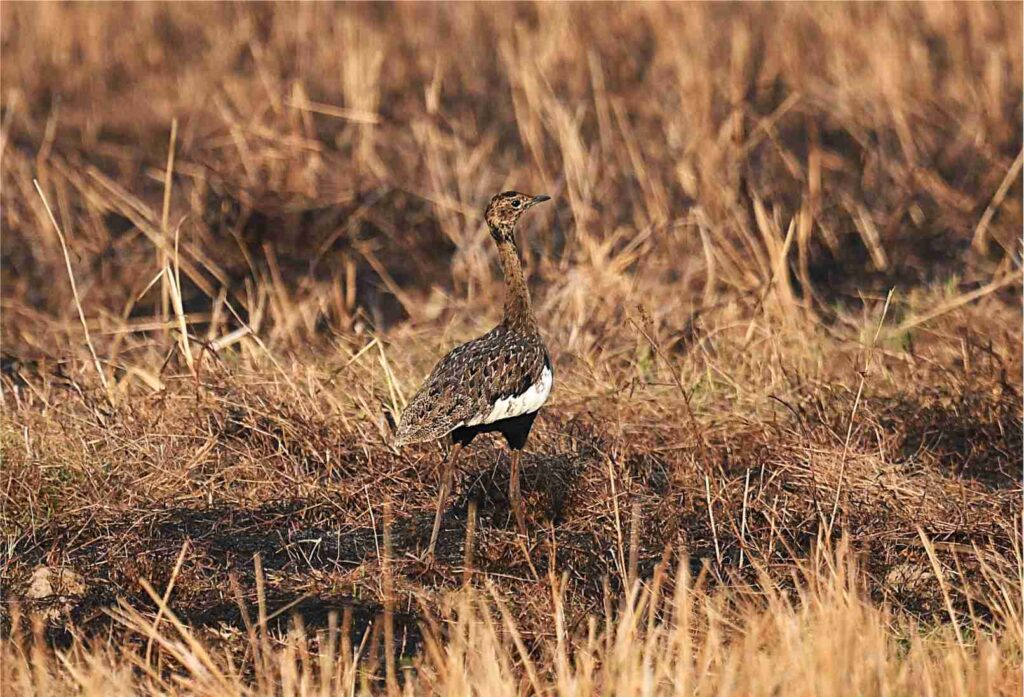
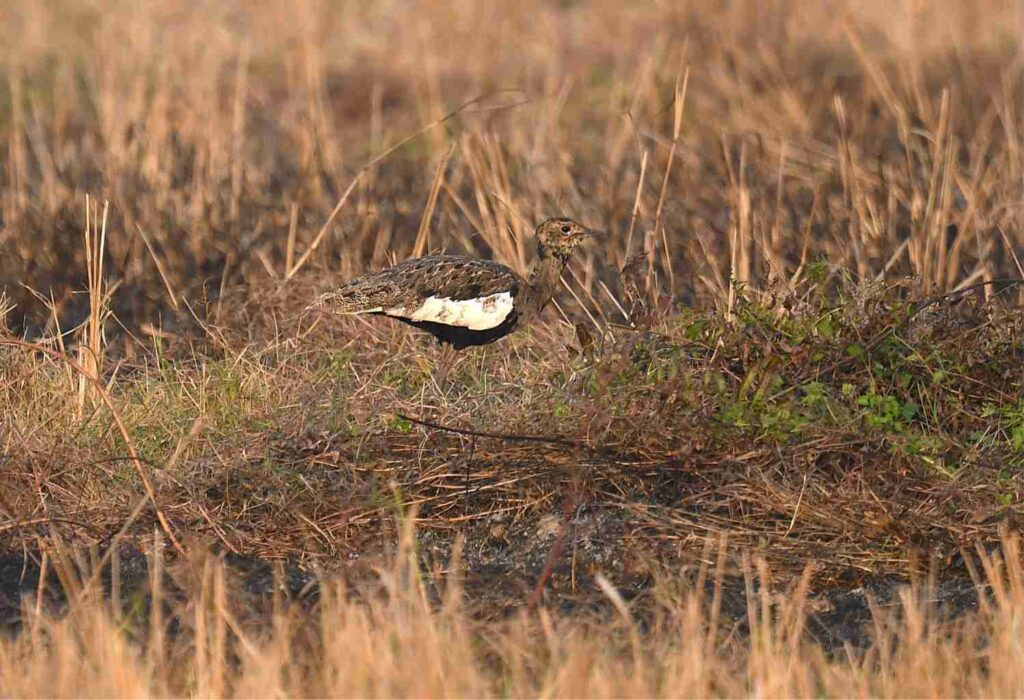
In April 2025, after more than 150 forest guards, researchers, and local youths fanned out across the grasslands of Manas for the Bengal Florican Census undertaken by the Assam Forest Department and the Wildlife Institute of India, hope was rewarded with the sighting of 38 displaying males and 2 females, nearly one-third found within the Koklabari agricultural fields itself—a quiet affirmation that conservation can thrive in human-nature companionship.
This miracle of balance grew from the roots of a remarkable community initiative—the Manas Maozigendri Ecotourism Society (MMES), born in 2003 from the conviction that true conservation begins when people and nature share a heartbeat. Led by the Bodo community in partnership with the Assam Forest Department and the Bodoland Territorial Council, MMES turned conflict into collaboration. Former poachers became protectors; guns were exchanged for binoculars, and today, stories of tigers, birds, and forests of Manas National Park are told through the voices of guides, guards, and artisans who have become the keepers of their land’s legacy.
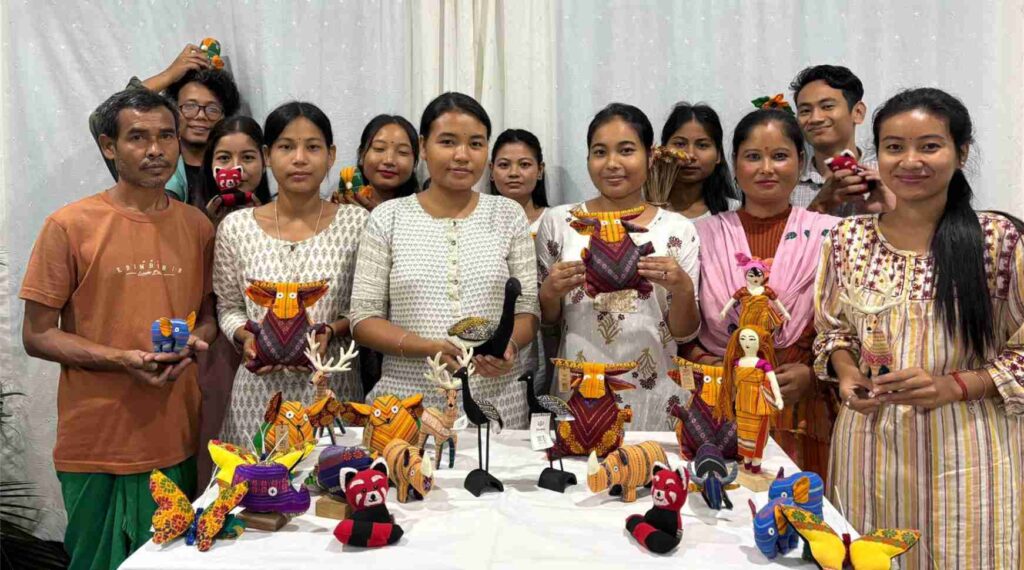
Beyond the census and the statistics lies the slower rhythm of life in the villages of Lwkhibazar and Koklabari, inviting you to walk or cycle through bamboo-fenced lanes, the air humming with the rhythm of looms weaving dokhona and aronai. Make it a point to stop at Zankla Studio, where villagers bring the forest to life by crafting soft toys inspired by its creatures.
For the traveller, especially the birder, Koklabari is more than a destination—it’s a revelation. From Guwahati, drive about 100 km on the highway under the Pathsala flyover, then take a right turn for 30 km to reach Lwkhibazar (Koklabari is less than 3 km away), where accommodations are simple yet warm. And somewhere amid the golden grasses, the Bengal Florican’s fragile flight becomes a metaphor for hope—a reminder that when humanity treads softly, even the most endangered dreams can rise again.
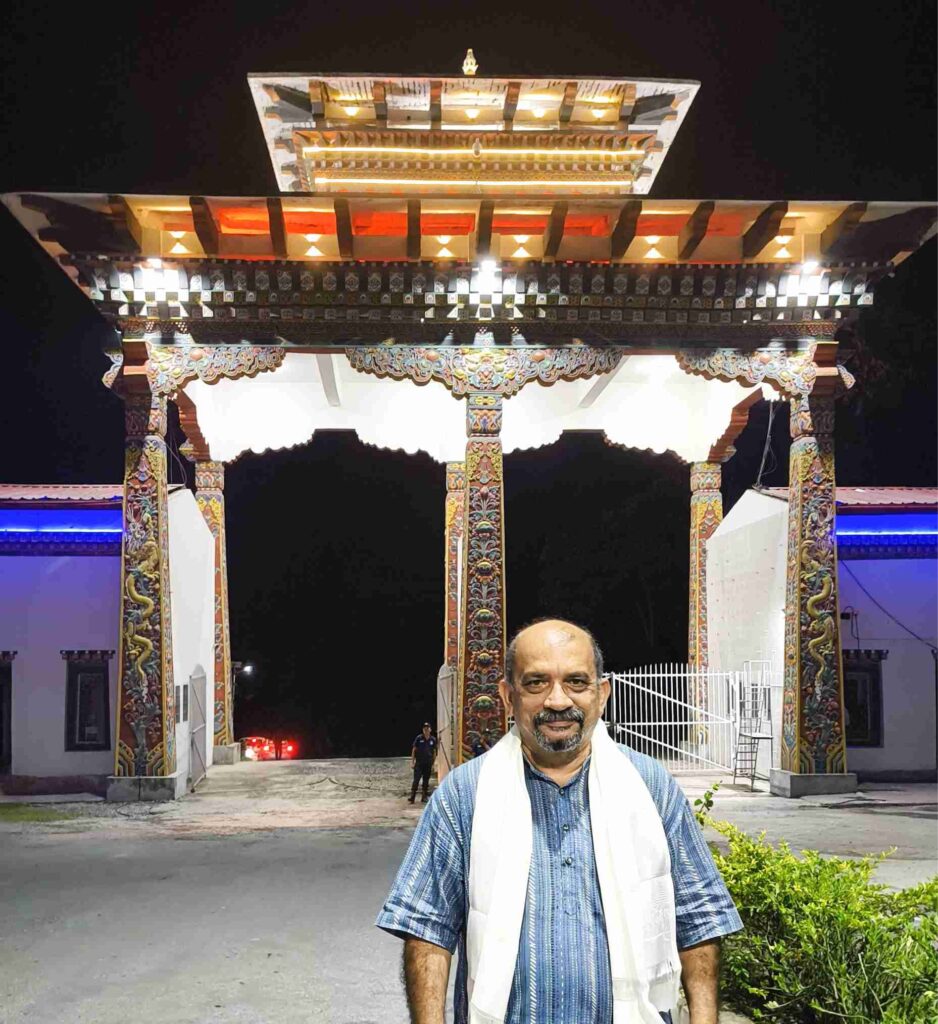
If time permits, cross into South-eastern Bhutan’s tranquil Nganglam, 22 km further away (with voter ID/passport). where forested roads weave through emerald silence. Keep an eye out for elephants crossing in quiet grace, as the drive turns into an adventure—ending with a Bhutanese lunch that tenderly completes this soul-stirring cross-border journey, capturing the thrill of excursion to an international border for a few hours.
Note: The Jeep drive from Koklabari leads to the Bhuyanpara Range of Manas National Park offering possible sightings of mammals and birds including graceful golden langursand elusive pygmy hogs to the majestic Bengal Florican gliding through the whispering grasses.