
The brief halt of the train at Simaluguri or Sivasagar Railway Station feels like an invitation to slow down and step into Eastern Assam; a landscape where travelling means a conversation between history, nature and living culture. With improving rail connectivity Sivasagar and Charaideo districts are no longer just places to be hurried through.
Nazira, along the banks of the Dikhow River in Sivasagar district, and has long been a place of movement and pause. Local legend traces the name Nazira to the Assamese term ‘Now Jeera’, meaning a resting place for boats. Some historians link it to Tai Ahom roots, ‘Na ‘referring to land, ‘Zi’ to inclination and ‘Ra’ to abundance, describing a gently sloping and fertile terrain. Enriched by tea, oil and gas, Nazira has long supported the regional economy, while its cultural depth draws strength from nearby Garhgaon, once the capital of the Ahom kingdom.
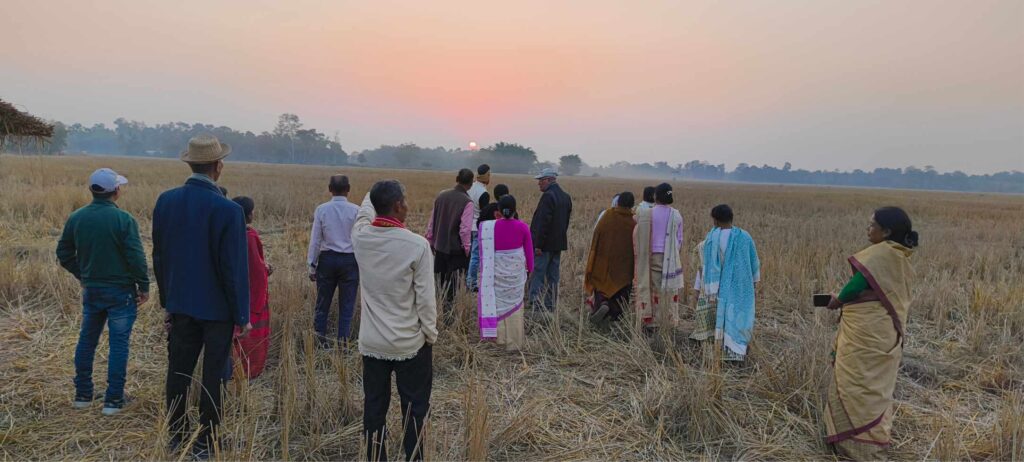
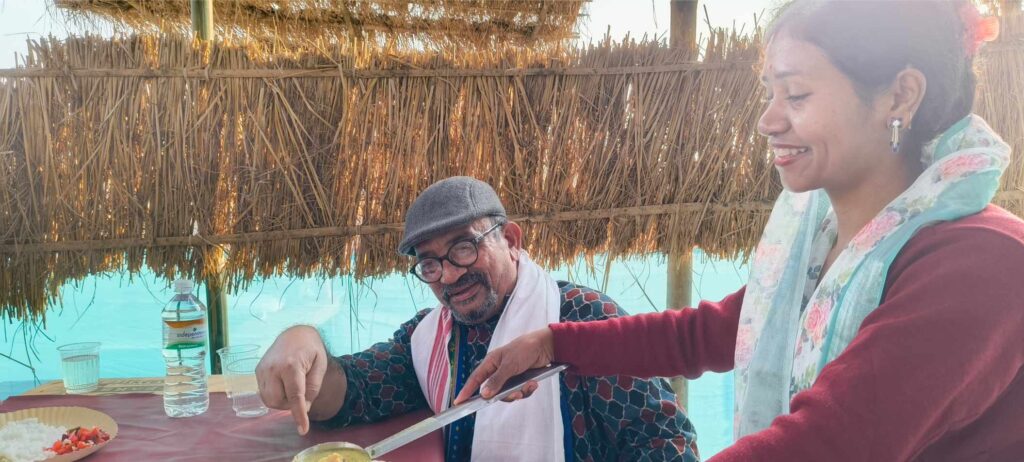
Not far from Nazira, Upor Harkina village is a notable example of community-led rural tourism, supported by the pioneers of Community-Based Tourism Promotion in Assam. Here, tourism grows organically from everyday life rather than imposed models or hurried infrastructure. Villagers invest time and learning into hosting and storytelling, with experiences conceived, planned and managed collectively. This shared ownership reflects the true spirit of rural tourism and offers a glimpse of how Assam’s villages can evolve into living classrooms for inclusive and sustainable travel, aligned with the vision of Sonar Asom Responsible Tourism Ventures.
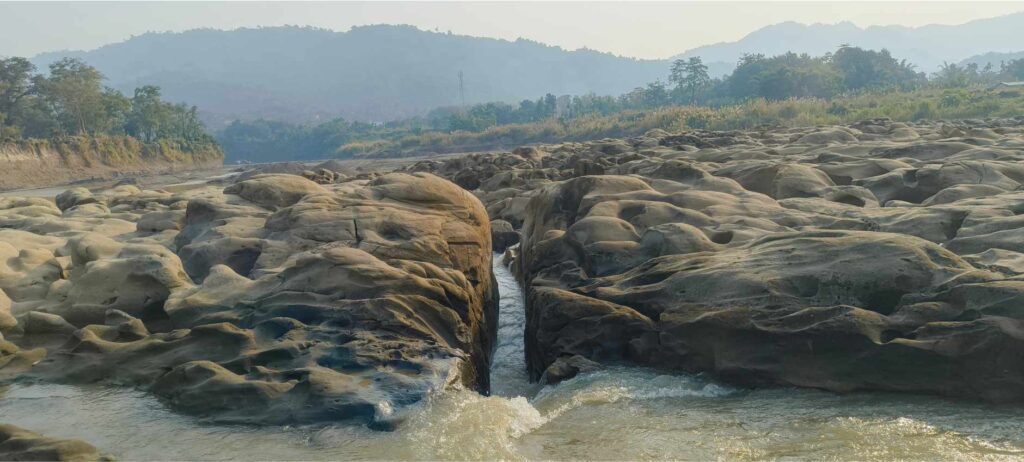
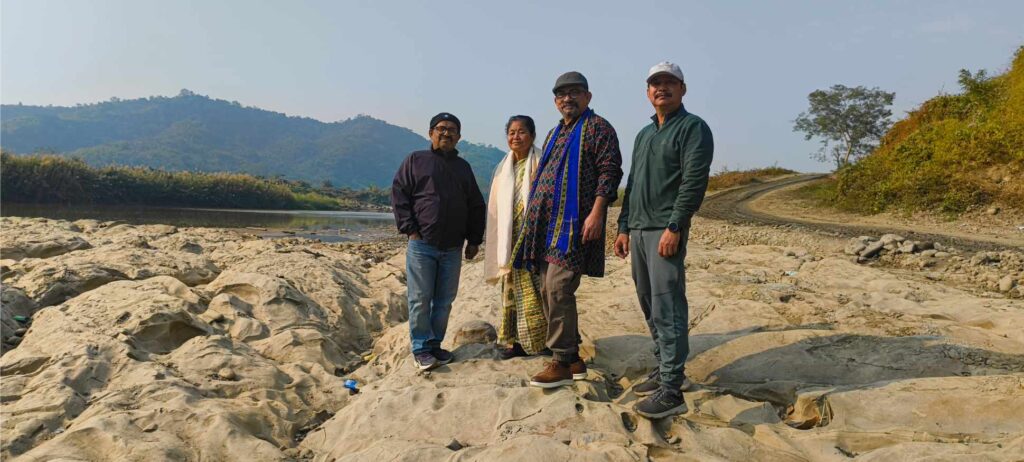
A short drive towards Borhill at Laxmijan near the Assam-Nagaland border reveals a riverside landscape shaped patiently by time. During the dry season, the exposed riverbed becomes a natural gallery of stones with gently rounded and patterned surfaces. Visitors can walk across formations that resemble ancient carvings, created solely by water and persistence.
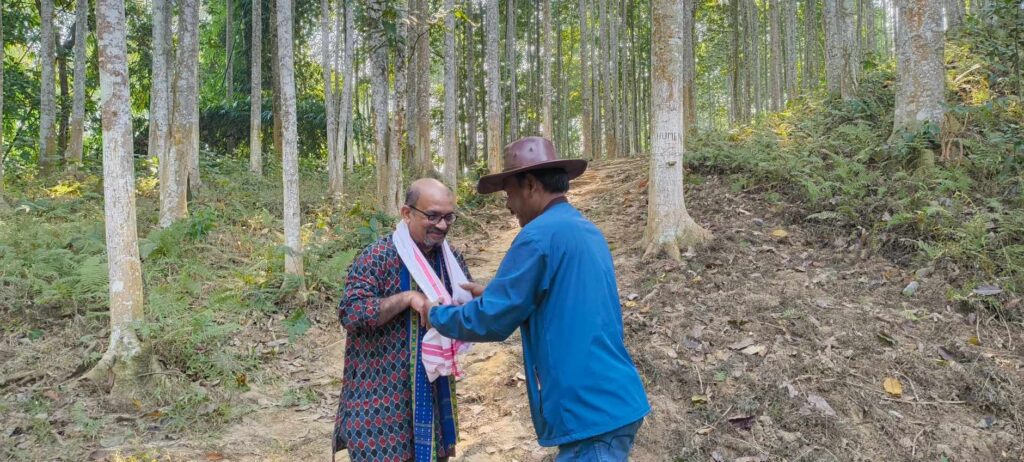
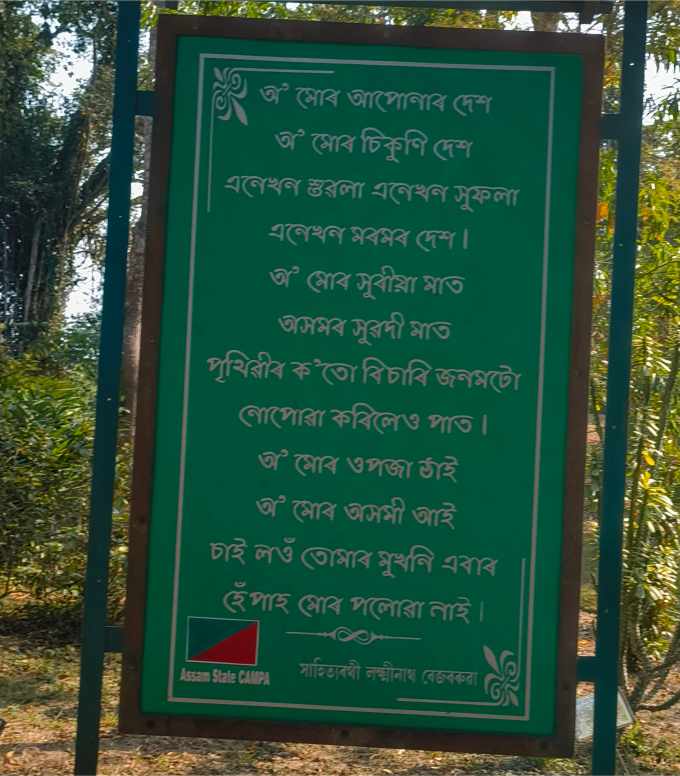
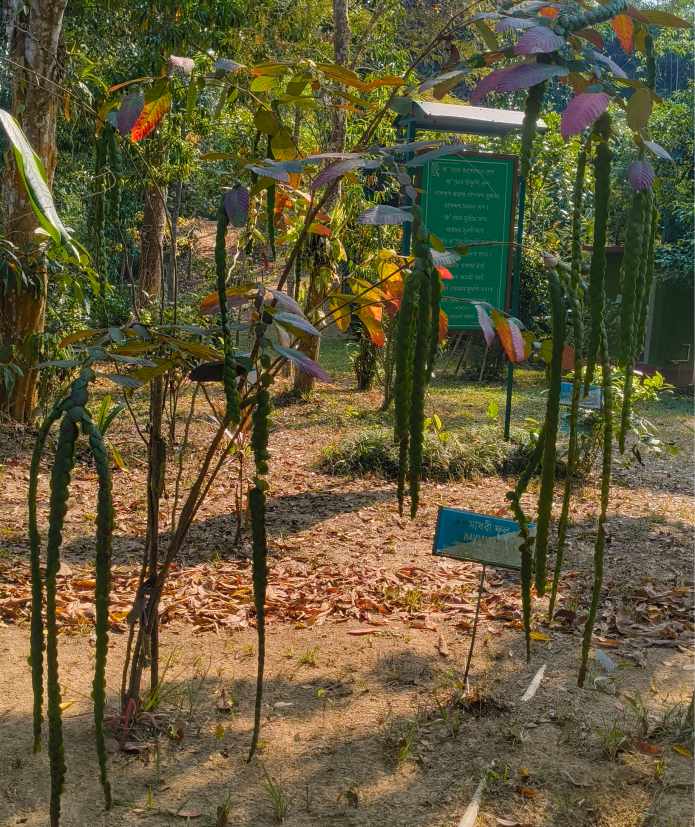
A detour leads to Sahitya Manishi Upaban at Geleki, one of the state’s several botanical and biodiversity parks. Orchids, medicinal plants, rare grasses, timber species, ferns, fungi and cycads creates an open classroom and a calm eco-tourism space. Dedicated to Sahityarathi Lakshminath Bezbaruah, the Upaban connects Assam’s literary heritage with its ecological wealth. Nearby, at Kamalabari, towering titachapa trees fill the air with fragrance offering a contemplative pause.
For nearly two decades, community-supported efforts have focused on restoring natural ecosystems and developing the district’s largest horticultural garden, now home to birds and deer. Forests enriched with native species and short trekking routes with views towards Nagaland draw students and nature lovers, reinforcing Assam’s potential for conservation-focused, community driven travel.
Nazira’s spiritual rhythm finds expression at the Agninav Shiv Mandir, closed on Wednesdays and Saturdays, blending devotion with daily life. The historic Dhodar Ali Road towards Namti Chariali adds another layer, the subtle fragrance from agarwood factories lining the route tells stories of craft, trade and forest based livelihoods.
The journey finds a quiet historical pause at Samaguria Raja Moidam, the burial site of Ahom king Suhung, whose reign lasted only a few weeks, reminding travellers that even brief moments of history leave enduring marks on the land.