
A meaningful journey through Assam begins not only with landmarks but with the people who bring destinations to life. Tourist guides and sarothis are often the first link between travellers and places, acting as storytellers, safety managers and cultural interpreters. Through their role, they shape how destinations are understood, experienced and remembered, and when well trained, they contribute to organised, responsible and inclusive tourism growth.
Foundational classroom training of trainee guides
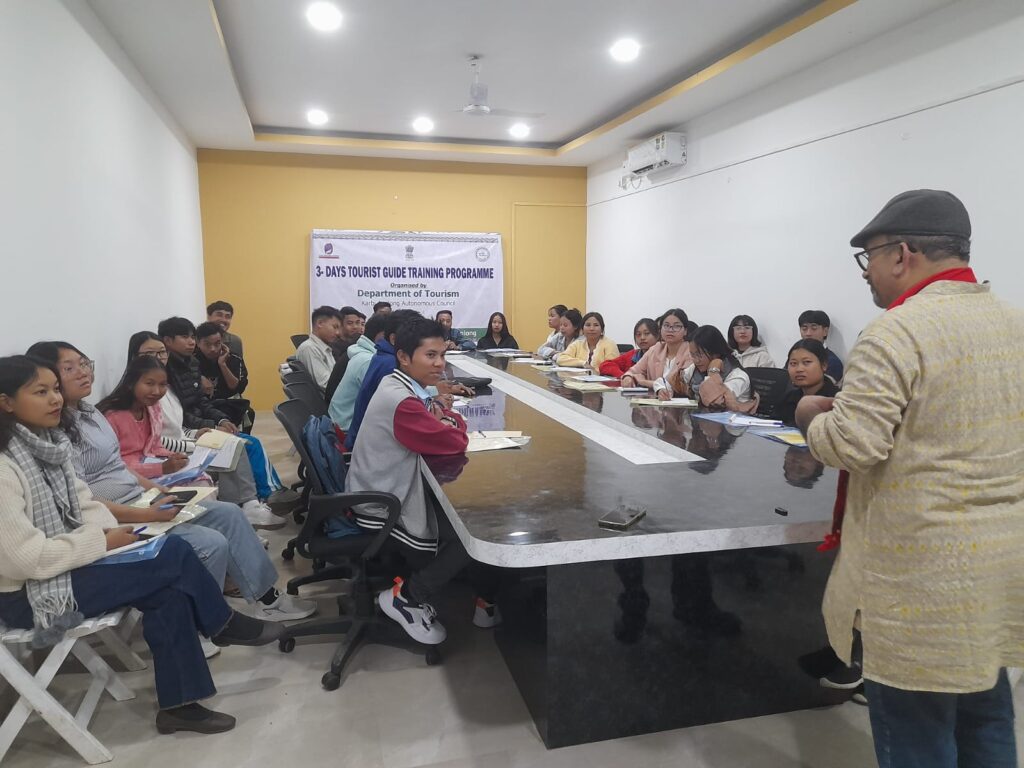
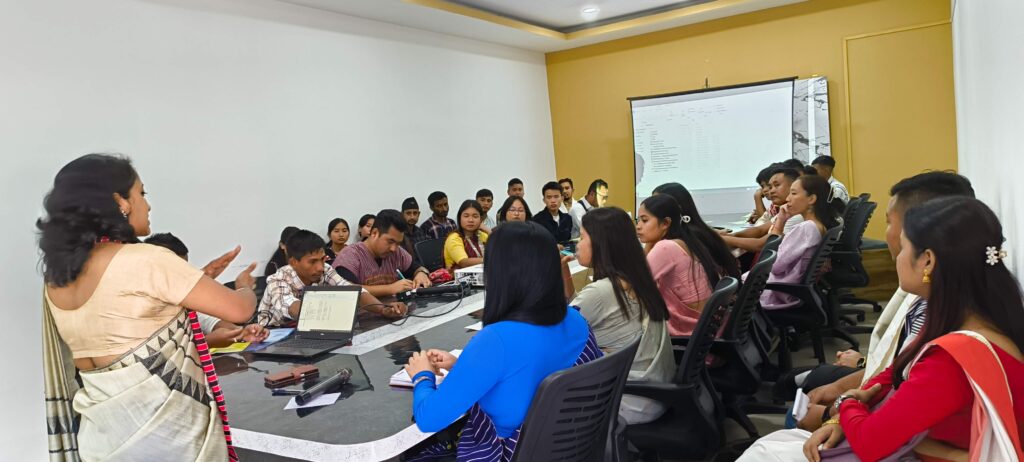
The foundation of destination development lies in structured tourist guide training supported by tourism boards and led by experienced resource persons. Such training values both early-stage learners and individuals with passion, curiosity and lived experience, creating a dynamic learning environment where youthful energy is balanced with maturity and deep local insight.
Effective tourist guide training begins with a clear understanding of tourism in its true context. Tourism is not simply about showing places; it is about managing people, expectations, culture, environment and time. Mentors combining academic grounding with field experience play a vital role. As tourism educators, they bring clarity to concepts, ethics and professional conduct. As experienced practitioners, such as tour operators, they share practical wisdom about ground realities, challenges and how guides should respond in real-life situations.
Training focuses on the practical role and responsibilities of a tourist guide, skills and professional ethics, supported by field-based learning. Guides are encouraged to view tourism from a local perspective, understanding how their actions influence villages, natural sites and community livelihoods. This builds responsibility and ownership rather than dependency. Guides learn that their words and actions can either protect or harm a destination.
First-aid training session for trainee tourist guides
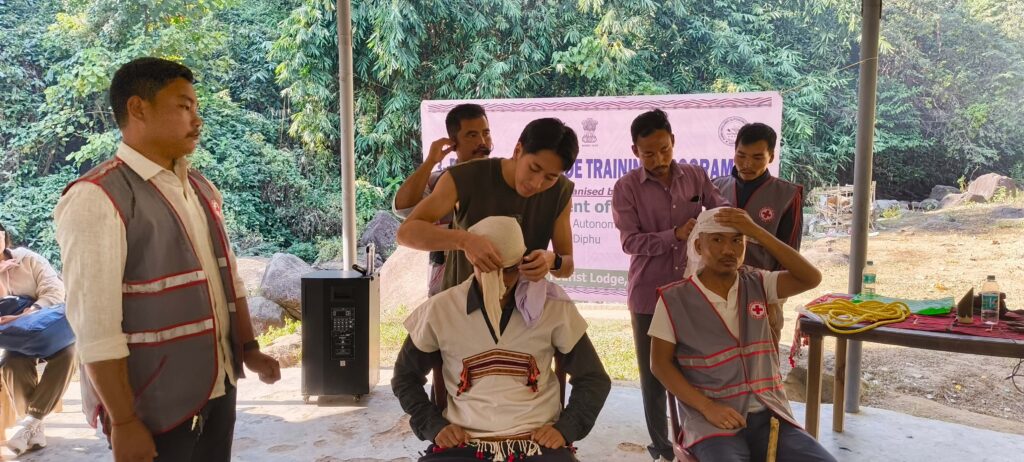
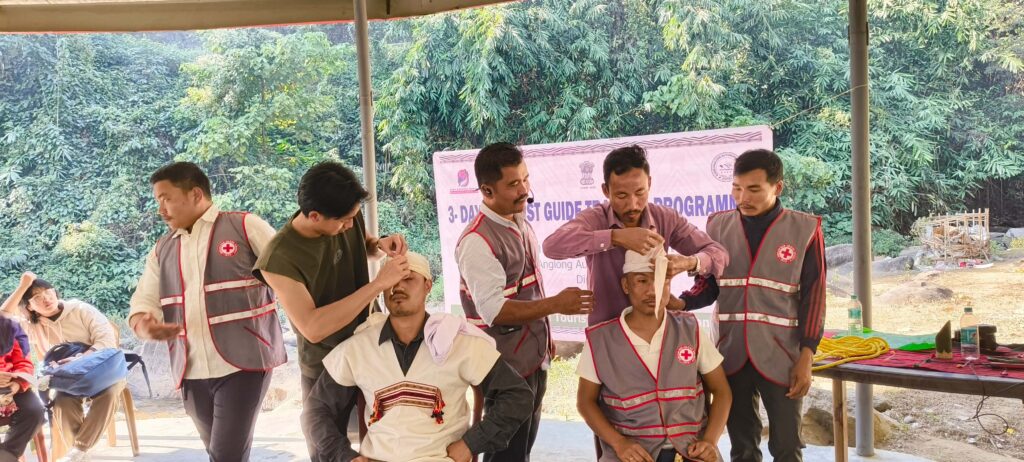
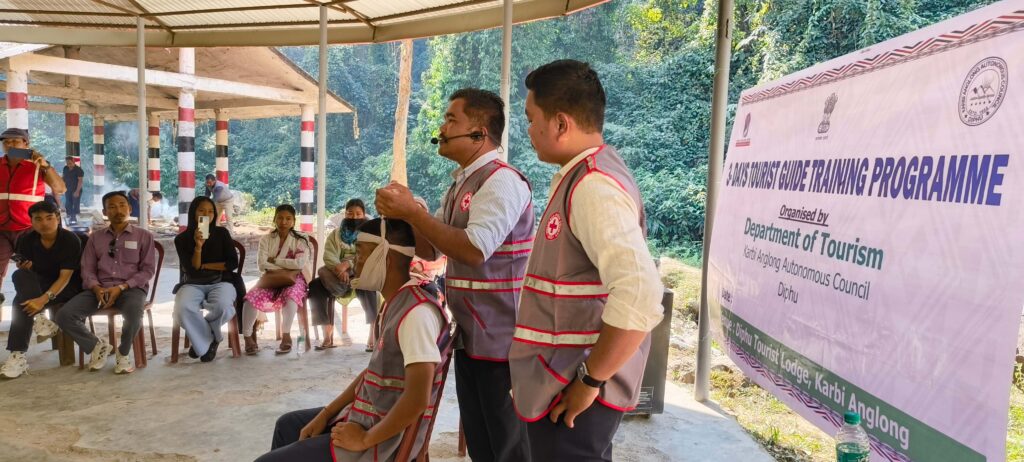
Operational skills form a vital part of guide training. Time management, handling complaints and crisis response are essential. Tourist guides learn the importance of always having a Plan B or even Plan C, due to various unwarranted situations or shifting traveller needs. At the same time, training clarifies the distinction between guides and tour operators.
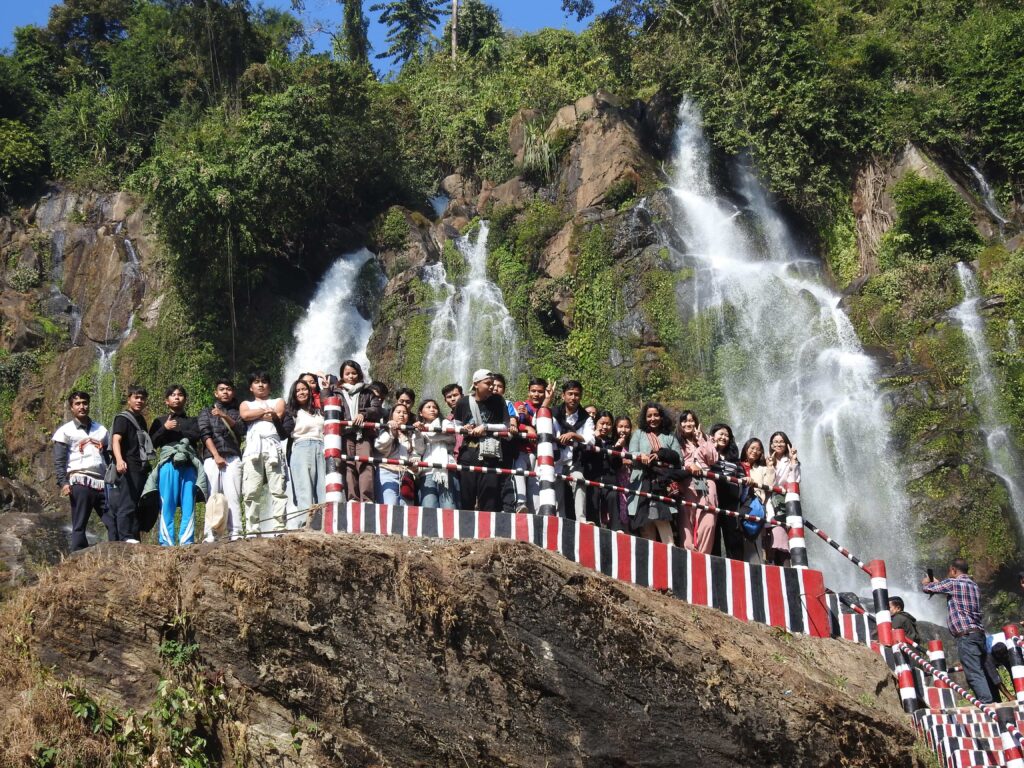
Field exposure makes learning practical and meaningful. At sites like Dikrupti Waterfall in Karbi Anglong and other tourist locations, guides learn that safety is paramount—managing visitor movement, understanding seasonal conditions and recognising natural warning signs. Training in first aid, disaster preparedness and wilderness response further equips them to handle emergencies in remote areas, forming the foundation of responsible nature-based tourism.
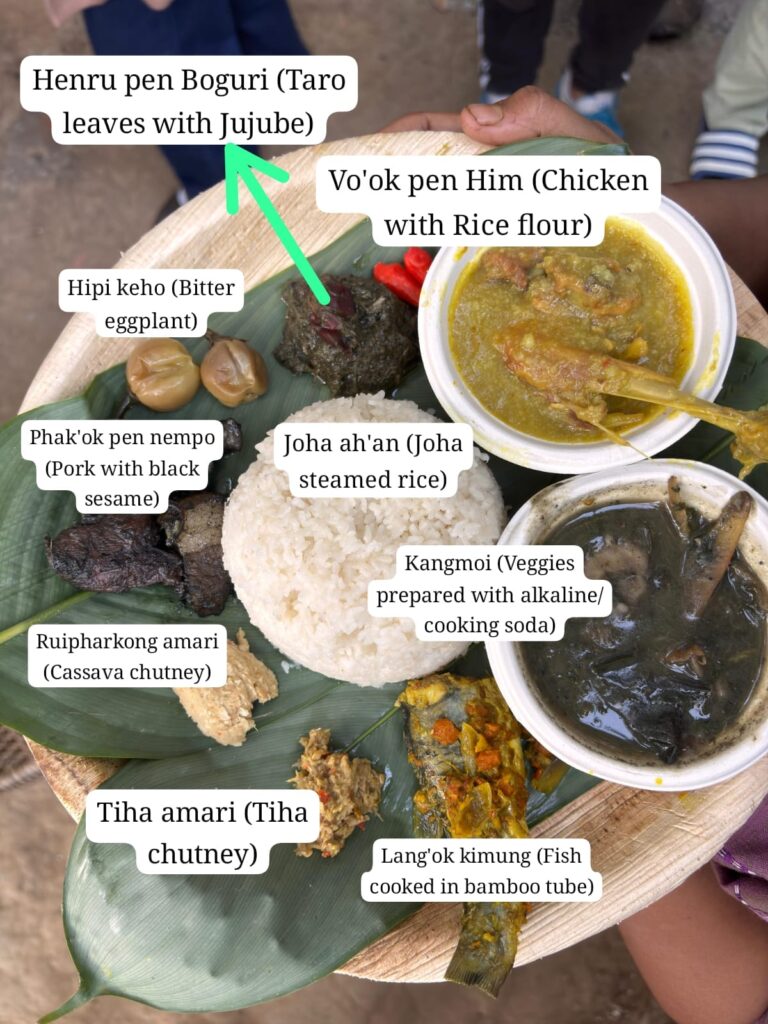
Storytelling is central to guiding, going beyond identifying wildlife to explaining the meaning of places. Understanding the origins of names like Kaziranga, rooted in Karbi folklore and ancestral traditions, helps present the park as a living cultural landscape. Storytelling also extends to food, where traditional Karbi and other indigenous meals allow guides to interpret culture through taste.
National tourism organisations recognise tourist guides as unofficial ambassadors, leading to initiatives such as the Incredible India Tourist Facilitator programme by the Ministry of Tourism. These certifications raise service standards, provide national recognition and create structured pathways for aspiring guides. When complemented by local, field-based training and mentorship, they help develop knowledgeable, responsible and confident guides who represent Assam’s destinations with care, credibility and pride.