
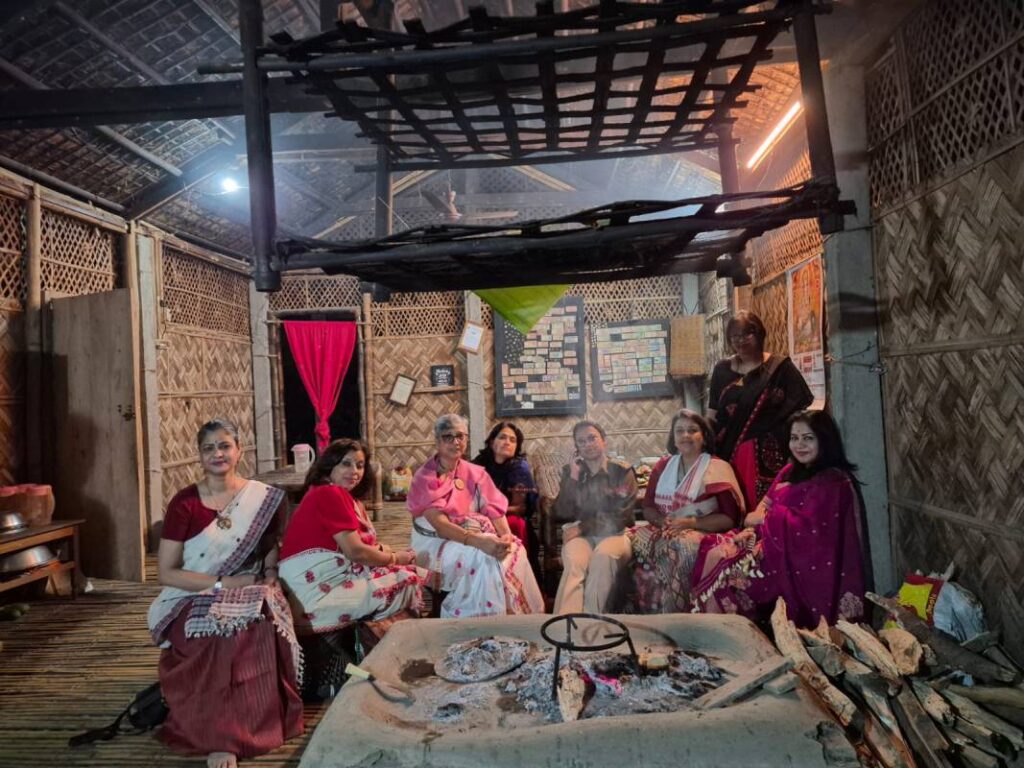
In the midst of demanding professional lives and family responsibilities, travel often becomes a postponed dream. Work schedules, household duties, and everyday commitments rarely leave room for long holidays. A close-knit group of childhood friends, now quinquagenarian women from accomplished professional backgrounds, felt that even a brief window of time was enough to immerse themselves in one of Assam’s most culturally significant landscapes, shaped by the timeless flow of the Brahmaputra River.
Their journey was a meticulously planned itinerary that unfolded through multiple modes of transport, beginning with a train, continuing by mini coach, crossing the river by ferry, and concluding with a luxury coach, making careful use of every available hour.
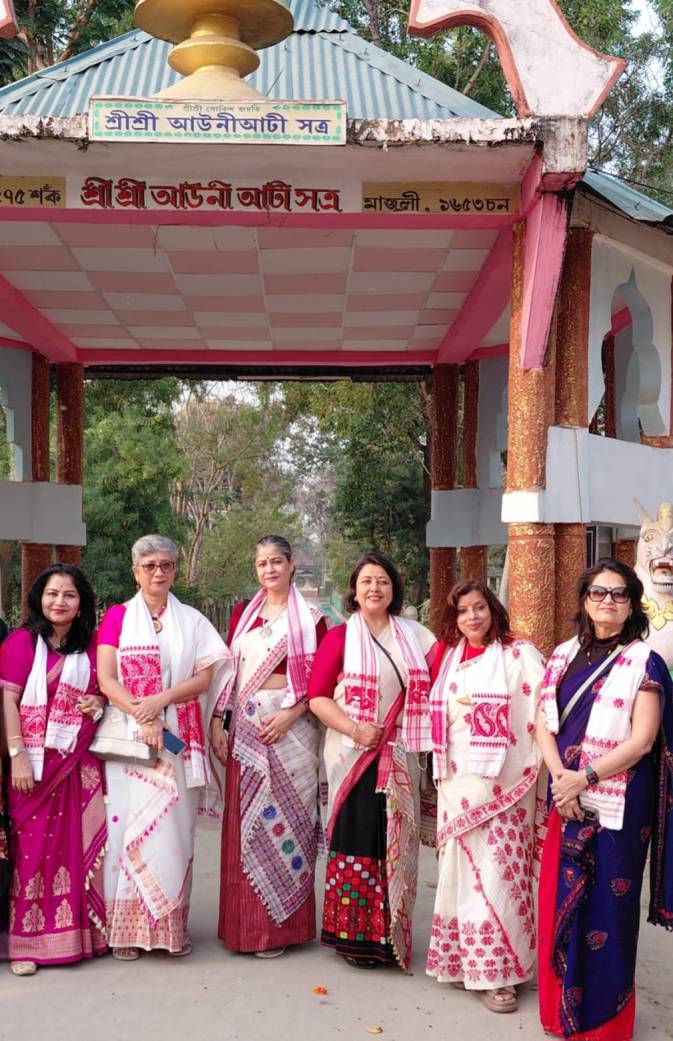
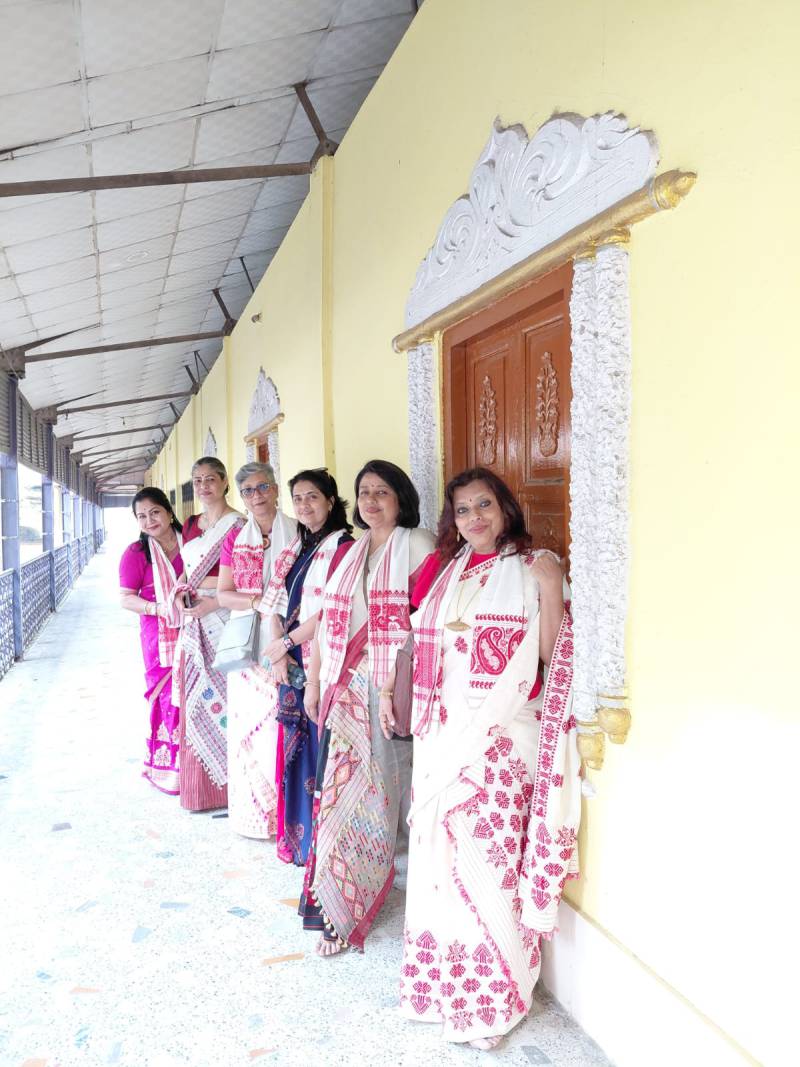
The journey began from Guwahati Railway Station as they boarded the Rajdhani Express at 7:40 pm. The journey began not only with movement but also with conversations, laughter, and the rare joy of stepping briefly away from routine. The next morning by seven, they arrived in Dibrugarh and set out by road towards the magnificent Bogibeel Bridge.. After freshening up and breakfast, the group dressed in traditional mekhla chador and gamusa, a small yet heartfelt way of connecting with the cultural soul of Assam.
The road journey itself became an experience. Travelling along the Matmora Mathauri (dyke) in Lakhimpur District, they moved beside the mighty Brahmaputra whose waters shape the life and landscapes of the region. This stretch also hosts India’s first geo textile embankment project built to protect riverbank communities from erosion.
By early afternoon they reached Majuli, celebrated for its historic satras and serene riverine scenery. Their exploration began at Samaguri Satra, a seventeenth-century institution renowned for its traditional mask-making used in Bhaona performances.
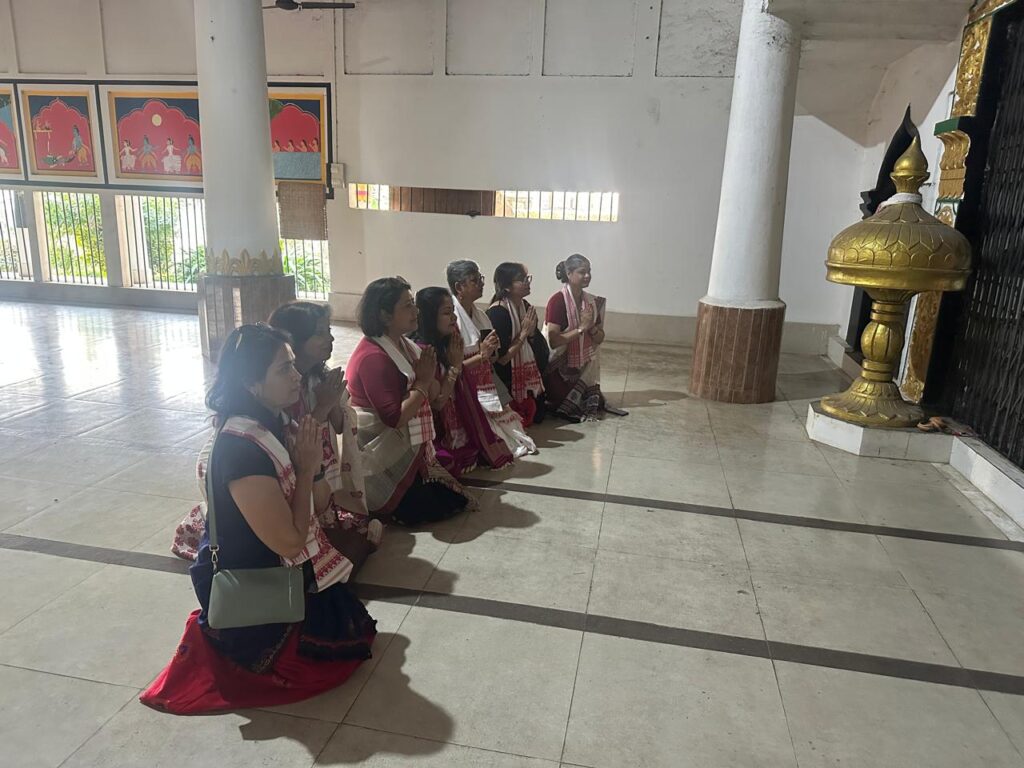
They continued to Dakhinpat Satra, founded in 1654 under the patronage of the Ahom king Jayadhwaj Singha, where the namghar and manikuta reflect the spiritual legacy of Srimanta Sankardeva. Their journey then led them to Kamalabari Satra, a major centre of Satriya culture, and finally to Auniati Satra, one of the four royal satras of the Ahom kingdom whose museum preserves manuscripts, textiles, ornaments, and other artefacts of Assamese history.
A traditional lunch with delectable cuisine served in a rural setting “Juhaal” became one of the most delightful moments of the trip, also reflecting the warmth of Assamese hospitality.
By evening they checked into a hotel and early next morning began with bird watching in nearby wetlands where migratory birds glided quietly across calm waters. Later, they explored neighbouring villages, visiting homes on stilts where handwoven textiles were still being crafted on traditional looms.
They returned by crossing the Brahmaputra by ferry from Nimati Ghat and reached Jorhat before boarding a bus that carried them back to Guwahati by late evening.
The journey was not about luxury but about determination, curiosity, and the belief that even with limited time one can still experience the cultural and spiritual heart of Assam. Balancing work, family, and responsibilities every day demands organisation and remarkable fortitude. When that same spirit guides travel, even a short journey can unfold beautifully.